

I’ve always found it fascinating: I see more people hitting the wall or needing medical assistance in half marathons than in 100-mile ultras.
Why? Preparation.
Most people think they can “wing” 13 miles. Nobody thinks they can wing a hundred. And that difference in attitude changes everything — before they even get to the start line.
The Further You Go, The More The Small Things Become The Only Things
As the distance increases, the margin for error shrinks towards zero.
Marathons force you to think about fluid and fuel. 50ks make you consider navigation and chafing. 50 miles require a plan for changing weather and GI issues. And 100 miles demand a strategy for footcare, mental hallucinations, and even 15-minute “dirt naps” in a hedge at 3am.
It’s not that longer races attract more serious runners. It’s that longer races make you serious. The distance does the work. It strips away the illusion that good intentions and a decent pair of trainers will see you through.
Half marathon runners get caught out because the distance doesn’t demand a plan. It allows you to be underprepared and still finish. Most of the time.
Until it doesn’t.
The Pendle Way
A few years ago, I lined up for the Pendle Way in a Day — a 40-mile ultra, over Pendle Hill and around the surrounding fells, usually run the first weekend of February.
I should have known what February in Lancashire meant. I did know. I just didn’t act on it.
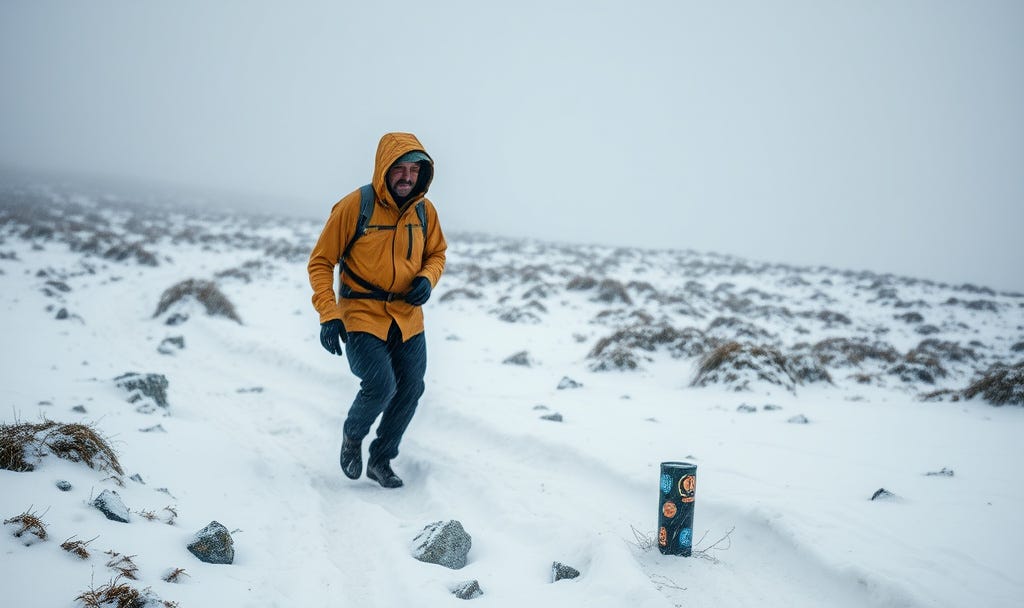
The conditions that day were brutal. Driving rain and wind from the off, temperatures dropping below zero as we climbed. By mile ten I was soaked to the skin. Not damp — soaked. The kind of wet where your gloves are heavy and your jacket has stopped doing anything useful. By mile fifteen I was wearing every piece of kit I owned and it wasn’t enough. I was shaking so hard I couldn’t even get my gloves off to open a gel.
I was shuffling across an exposed fell in sub-zero wind, my body beginning to shut down. Not dramatically. Quietly. That’s how hypothermia works — it doesn’t announce itself. It just starts making decisions for you.
What saved me wasn’t fitness. I had plenty of that. What saved me was knowing the route. I’d recced it. I knew exactly where I was, and I knew where the next road crossing was. I called Catherine, walked to the road, and she picked me up.
Another hour out there and I’m not sure the story ends the same way.
I retired, called the race officer, and sat in a warm car feeling equal parts relieved and humiliated. I’d underestimated the conditions. I had the miles in my legs — I didn’t have the kit on my back.
The Long Run Mindset is free. If you’re reading this and not yet subscribed, the best thing you can do to help is hit the button below — it takes ten seconds and it means the world. There’s a paid tier too if you ever want more, but free is absolutely fine and genuinely helpful.
The Bowland Ultra
A few years later, I learned the second half of the lesson.
The Bowland Ultra — 45 miles over the Bowland Fells in January. I turned up properly this time. Layers sorted, nutrition planned, waterproofs tested. I’d done the work.
The fells were stunning. Snow-covered and silent, the kind of morning that makes you remember why you do this. Beautiful, but unforgiving. In places the snow was knee-deep on the path. Step off it — and out there, covered in white, you couldn’t always tell where the path was — and you’d go in waist-deep. Every step demanded attention.
Descending off one of the fells, I hit a patch of ice. I’d put my snow spikes on by then, but it wasn’t enough. I went down hard.
The fall itself wasn’t serious. Winded, shaken, a bit battered — but nothing broken. I got up, took stock, and started moving again. That’s when the back pain started. Not sharp. Deep. The kind that tightens with every stride until running becomes unbearable and even a slow shuffle feels like a negotiation.
I made it to the next checkpoint. Then I retired.
Here’s the thing though: I was warm. I was dry. I was safe. I made a clear-headed decision based on a real assessment of my body, not a panicked scramble for the nearest road. I’d got the kit right this time. I just couldn’t finish. And that’s a completely different kind of DNF.
The Cost of Underestimation
Two DNFs. Same fells, roughly. Very different outcomes.
In the first, poor preparation nearly cost me my health. I had the fitness but not the kit, and I was lucky the route knowledge was there to bail me out.
In the second, good preparation meant a bad day stayed a bad day. It didn’t become a crisis. I retired on my own terms, not the mountain’s.
In business, poor preparation costs you a bad quarter. In the fells, it costs you your health. Sometimes more.
The difference isn’t talent. It isn’t even experience, necessarily. It’s whether you took the conditions seriously before you got into them.
The Recce
The word “recce” comes from military reconnaissance. Going ahead. Checking the ground. Finding out what you’re actually dealing with before you commit.
Every serious ultra runner does recces. Not because they’re nervous — because they’re professional about it. They know that familiarity with the route is a form of kit. Knowing where you are when things go wrong is the difference between a controlled retirement and a mountain rescue callout.
I see business owners who skip the recce constantly. They have goals — vivid, detailed, motivating goals. But they haven’t walked the route. They haven’t stood on the hill on a quiet Tuesday and asked themselves: what happens here if the weather changes?
A goal is where you want to go. A recce is finding out what stands between you and it.
Don’t mistake the two.
A goal without a plan is just a dream.
And on an exposed fell in February, dreams don’t keep you warm.
Ask yourself honestly: do you have a plan, or do you have a goal with a hopeful face on it? Have you done the recce — on your finances, your health, your business — or are you assuming the conditions will stay kind?
They won’t always. The weather will change. The question is whether you’ll be ready when it does.
If you’ve enjoyed this and not yet subscribed, the best thing you can do to help is hit the button below — it takes ten seconds and it means the world. There’s a paid tier too if you ever want more, but free is absolutely fine and genuinely helpful. 👇