

The injury, the Vivos, and why “it doesn’t always get worse” might be the most important thing I know.
Twenty weeks out from the 130 mile Liverpool - Leeds Canal Race, and I’ve just lost three weeks of training to a swollen foot. Let me tell you what happened, what I’ve learned, and why I ended up buying a bike.
The background first. Training had been going well — 50k Tuesday long runs for four consecutive weeks, which were doing exactly what I needed them to do: revealing weaknesses. Two things kept showing up. Weak glutes. And persistent pain in my first and second toes on my right foot.
The terrain on the LLCR is different from anything I’ve raced before. Flat, hard, tarmac and compact surfaces with the occasional grass or mud section thrown in. My usual minimalist shoes are brilliant for technical mountain or fell terrain — the biomechanical chain handles the impact beautifully. But over 35 hours on hard flat ground, that chain has to absorb a very different kind of punishment. I’ve been trialling different shoes each Tuesday to work out what actually performs on this surface, and there’s still plenty to figure out. Being at the end of August, sweat is going to be a real problem — keeping my feet dry, managing shear, avoiding blisters. That stuff can end a race. The fact I can change shoes at checkpoints makes this one of the most important things I need to get right before August.
Which brings me to the Vivos.
When I first transitioned to barefoot shoes, I bought two pairs of Vivobarefoot — the ones everyone raves about. They never worked for me. After about an hour they’d rub the top of my feet and I’d be done. One pair has about 150 miles on it; the other has six. Two very expensive paperweights. Sensible Andy would have donated them months ago. Instead, I decided to get my money’s worth.
I wore a pair for parkrun. Three miles, a bit of rubbing, feet fine the next day. I wore them again the following day. I remembered immediately why I’d stopped. Cut the run short.
A couple of days later I did my Tuesday long run in my cushioned trail shoes — the ones that carried me through 113 miles on the Summer Spine Challenger last year. No rubbing. A small amount of the toe pain I’d been experiencing, but nothing to worry about. Until I took my shoes off.
My right foot was swollen like a balloon.
Matt, my physio, came the next day. He flushed a lot of the swelling away and was fairly confident it wasn’t a stress fracture — just bruising. Reduce the mileage. Do these rehab exercises for your toes and glutes. Then come back gradually.
Any runner knows what comes next. Two weeks of reduced mileage, barely 12 miles in a week where I’d been doing 50 to 60. No pain during runs. Pain and slight swelling after every run. It wasn’t getting better, and I’d convinced myself it was a stress fracture — which, combined with developing calf tightness and the early signs of plantar fasciitis, had me spiralling into a pretty dark place. I stopped running altogether for nearly a week.
The Long Run Mindset is free. If you're reading this and not yet subscribed, the best thing you can do to help is hit the button below — it takes ten seconds and it means the world. There's a paid tier too if you ever want more, but free is absolutely fine and genuinely helpful.
I went back to Matt fully expecting to be sent for an X-ray.
He talked me through every possibility — an oedema (bruising), a stress fracture, arthritis. The arthritis was the least likely given how quickly it came on. The oedema was the most likely and would also explain the other niggles. Stress fracture was still on the table, but here’s the thing: the treatment for both a stress fracture and an oedema is rest. So we’d treat it as an oedema and see.
And then Matt said something that only works because he knows me well: don’t stop running, because I know that’ll affect your mood too much, and then you probably won’t do the rehab either. If the swelling or pain gets too bad, get on a bike.
That afternoon I bought a bike.
An exercise bike, to be specific. It sits in the corner of the room looking very pleased with itself. Brand new, slightly smug, and so far entirely unridden. I’m not ruling out the possibility that it becomes the world’s most expensive coat rack. But the point is, I had a plan — and having a plan was enough to stop me doing something stupid.
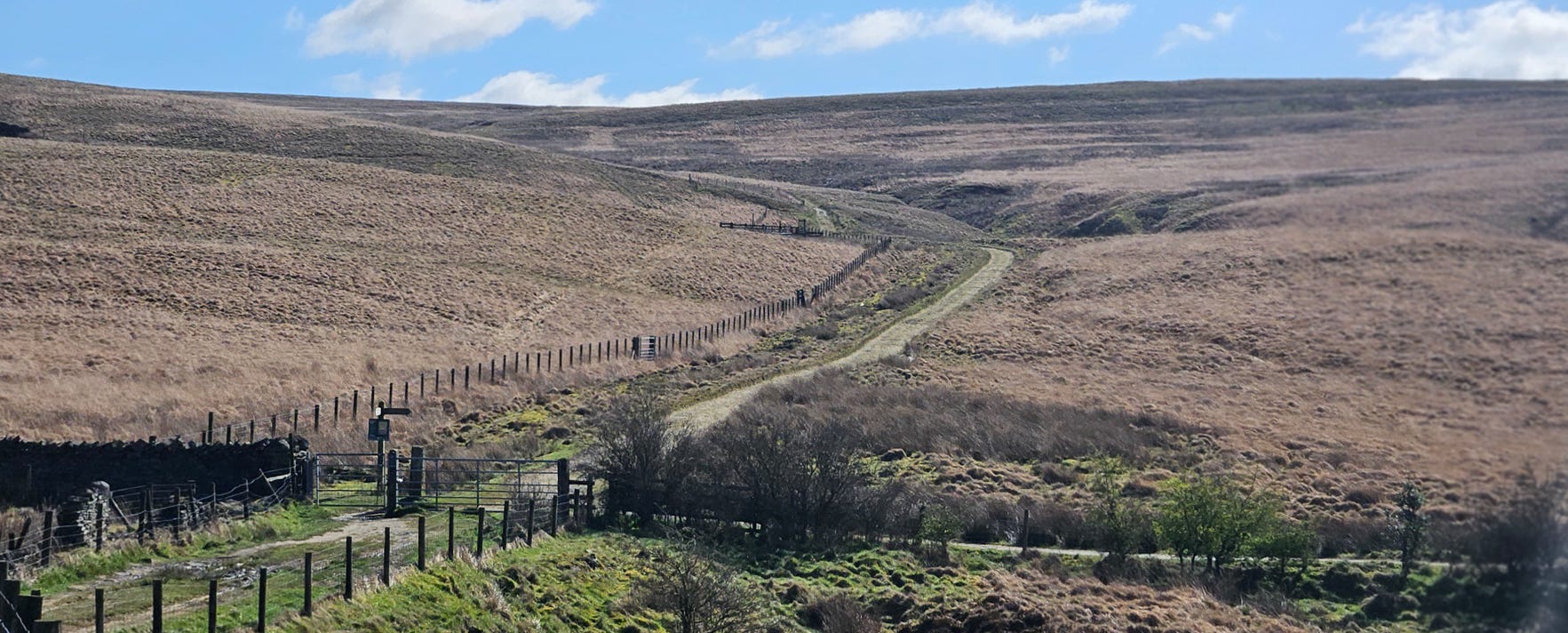
The next morning I did my go-to fitness test — half a mile from home to Gorple Track, a three-mile route with 1,000 feet of ascent up to Gorple Rocks. What we call the Big Rocks. It’s a tough climb, and the descent demands concentration. I’ve done it enough times to know exactly what my body is telling me up there.
I was expecting to turn around halfway. Either fitness or foot pain was going to stop me.
Something amazing happened instead. I felt strong. I enjoyed every step. I came home after seven miles with no pain, no swelling, and two Strava segment PBs.
I’ve run every day since.
When this goes out on Tuesday, I’ll be heading out on my first long run in four weeks. I know I’ve lost fitness — and I’ve had to sit through the banter from friends. It’s those silly shoes you wear. You need a rest day. You’re doing too much. On the face of it, they’re not wrong. There’s truth in all of it.
But here’s the lesson.
Everything has a cost. I paid the price for a combination of overtraining and being tight with my money over the Vivos. And I also gained something — knowledge about what my feet need for this race that I wouldn’t have without those miles.
The old mantra held true: it doesn’t always get worse. That seven-mile run on Gorple could have ended in the X-ray department. It didn’t.
And once again, I’m grateful for the power of the crew.
Matt knows me. Within 24 hours I went from frustrated and grounded to back on the fells — not because of a magic fix, but because he gave me the right advice for me. We talked through the risks honestly. We agreed we’d deal with whatever happened. That’s what you need from a support team.
The bike, for its part, has so far contributed nothing whatsoever. But I feel better knowing it’s there.
Enjoyed this? Share it with a runner who needs to hear that it doesn’t always get worse.
And if you’re reading this and not yet subscribed, the best thing you can do to help is hit the button below — it takes ten seconds and it means the world. There’s a paid tier too if you ever want more, but free is absolutely fine and genuinely helpful.
The Long Run Mindset for a Life Worth Living — every Tuesday.