


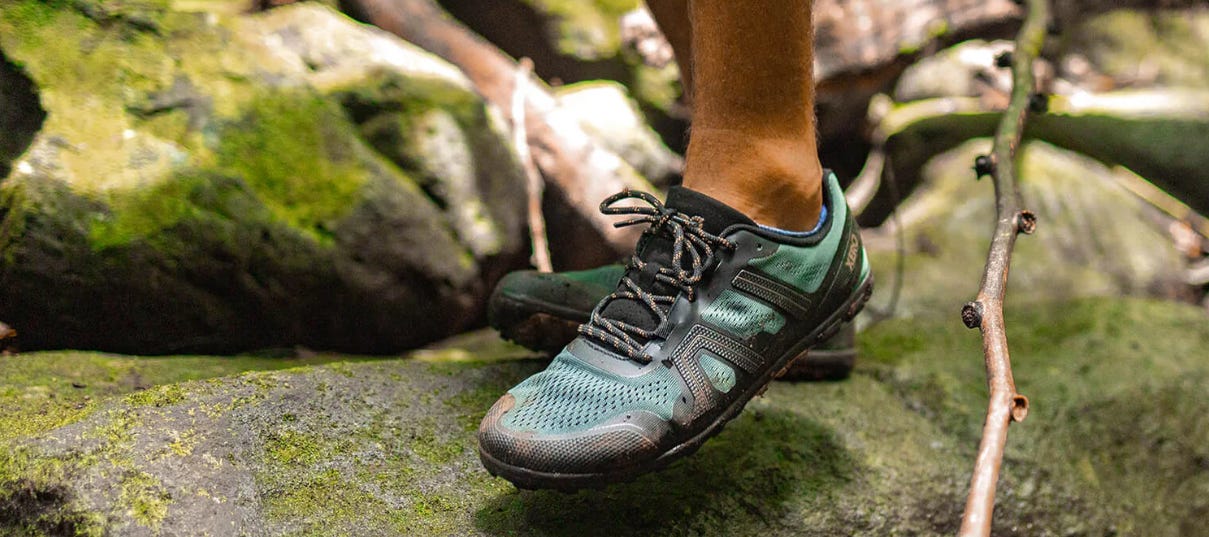
For years, I bought into the marketing. I wore the high-tech, super-cushioned “pillows” that every running magazine told me I needed.
Then I read Born to Run. I was captivated by the stories of the Tarahumara in the Copper Canyons, running hundreds of miles in thin sandals, and the revelation that world-class Kenyan athletes often only wore Nikes when they were competing. I was sold. I tried running truly barefoot on a treadmill, but after two miles left the soles of my feet in blisters, I retreated back to the safety of my heavily padded Hokas.
They felt great—until they didn’t. Eventually, my toes were being crushed and overlapping; I’d have to stop every five miles just to massage my feet back into a human shape. I had to stop listening to the adverts and start looking at the engineering.
The Marketing Trap
The running shoe industry is a masterpiece of consumerism. They’ve convinced us we need expensive shoes that “wear out” every 300 miles. It’s a brilliant recurring revenue model, but it ignores the fundamental truths of the foot:
Toe Boxes vs. Feet: Most shoes are pointed. Human feet are not. Wider toes mean better balance.
The Arch Paradox: If you support an arch from underneath, you weaken it. It’s basic engineering.
The Mattress Effect: Standing on a “pillow” shoe is like standing on a mattress; your legs wobble and work harder just to find stability.
Evolution: We evolved to run barefoot over millennia, not in “air bubbles.”
The Economic Upside: From 300 to 1,000 Miles
As a business owner, I started looking at the ROI of my gear. When I ran in Hokas, I had to replace them every 350 miles or so as the foam compressed and died.
Since switching to Xero shoes, I regularly get over 1,000 miles out of a single pair. They last three times as long because there is no complicated foam to break down. By stripping away the “tech,” I actually ended up with a more durable, cost-effective product.
The Reality of the Transition
Fixing the damage of decades in “normal” shoes is a “Long Run” in itself. Even now, I am still transitioning. For runs over 20 miles, I still opt for cushioned shoes. Why? Because as I get tired, my form slips. I’ve misplaced a foot on a rock and badly bruised my sole before—which is a miserable experience. I’d rather have the temporary “sore plantar” feeling after a long run than a bone bruise that stops me from running for weeks.
The Lesson: In business and in health, we are often sold “complex” solutions for problems created by the industry itself. But moving away from those solutions takes patience. It took me a year just to get into Zero Drop shoes for my daily miles.