


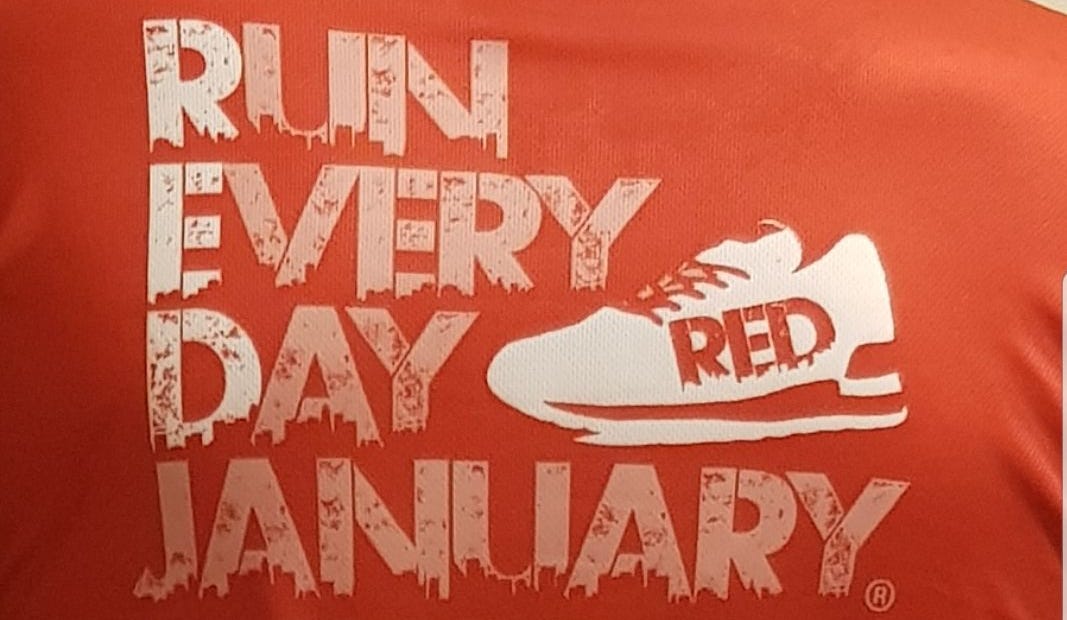
In January 2018, I started a challenge called RED (Run Every Day) to support the mental health charity MIND. It started as a bet between four mates. Most stopped after 31 days. One friend made it to 500.
I didn’t stop until day 1,564.
That’s four years, three months, and thirteen days of never saying “no.” People ask me why I advocate for a daily streak—especially given the risks of injury or burnout. My answer is simple: Consistency is the ultimate life hack.
Removing the “Decision Fatigue”
The biggest hurdle to any goal isn’t ability; it’s the mental energy wasted on deciding whether or not to do the work. By making my run a non-negotiable start to the day (minimum one mile, outside, under 13 minutes), I removed the choice. I didn’t have to check the weather or ask “do I feel like it?” The answer was always yes.
I’ve run in Tokyo at 3:00 AM while the city was locking down for a typhoon, fueled by a bit too much sake and the need to catch the last flight out. I’ve run through Covid, where the only time I left my bed for weeks was to shuffle through my daily mile. I’ve even run on a sprained ankle, spending the rest of my day in a compression ice boot just to earn the right to go again tomorrow.
The Science of the “First Few Steps”
Running every day—especially the day after a marathon—taught me a lesson in pain management. When your feet are a mess of blisters, putting on shoes feels impossible. You have to learn the “foot management” that works for you: Do you pop or tape? One pair of socks or two?
But the biggest discovery was mental: The first few steps are always the worst. When you start a run on battered feet, the pain is sharp and immediate. But if you keep moving, the blood flows and the pain subsides. This applies to everything. Things are often easier than you imagine once you’re in motion; you just have to endure those first few painful steps.
Reconnecting with the Natural Flow
Most of us live sheltered lives—moving from the house to the car, to the office. We are climate-controlled and disconnected.
Running every morning reconnected me to the natural flow of things. I noticed the subtle shift in the seasons that you miss from behind a windscreen. It gives you perspective. No matter how chaotic the business was, the sun always rose. Winter always turns into spring. Your current “crisis” is just a season, and it, too, will pass.
The Power of “I Can”
Above all, running every day taught me Gratitude.
There were mornings where the hail was driving into my face, my legs were heavy, and every blister was screaming. It would have been easy to complain. But then I’d remember: Today, I can. I can run a mile. One day, whether through age or ill health, I won’t be able to do it anymore. Knowing that makes every painful, wet, or freezing mile a gift. When you stop looking at your challenges as “obligations” and start seeing them as “opportunities,” your entire mindset shifts.
Knowing When to Stop
My streak only ended when my body finally sent a signal I couldn’t ignore. A few days after a lymph node biopsy, I developed swelling. My physio, “Big Hands Mat,” refused to treat me and sent me to a specialist who gave me a stern lecture on the dangers of continuing. I listened. Because the “Long Run Mindset” isn’t about being stubborn to the point of self-destruction; it’s about understanding your machine so well that you know exactly when it needs a pit stop.
The Lesson: Everyone has 15 minutes. Before you check your phone or look at Strava, get outside. Don’t do it because you’re a “runner.” Do it because the privilege of showing up for yourself and being grateful for what your body can do will change your life.